Felix Hansen · 9 October 2026
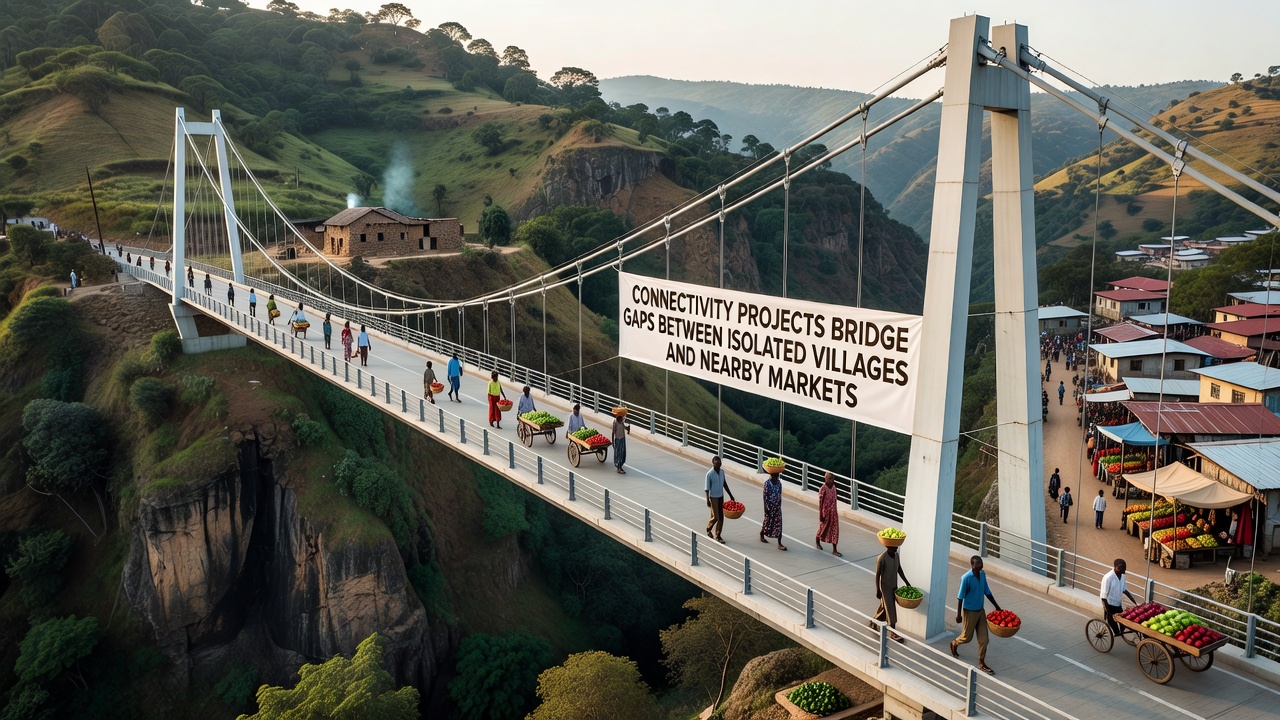
Connectivity Projects Bridge Gaps Between Isolated Villages and Nearby Markets
Connectivity projects have transformed access for communities previously cut off from economic activity, and data from multiple regions shows measurable gains in trade volume and household income when roads, bridges, and digital links reach isolated settlements. Researchers tracking outcomes across Asia, Africa, and Latin America report that paved routes and reliable broadband reduce travel time by up to 60 percent in many cases, allowing farmers to reach buyers before produce spoils and enabling small traders to restock inventory more frequently. Government agencies in the European Union and Transport Canada have documented similar patterns where upgraded secondary roads replace seasonal tracks, turning once-weekly market trips into daily exchanges that support local processing businesses.
One study conducted along corridors in Kenya and Tanzania found that villages within 15 kilometers of a newly surfaced road increased the share of output sold outside the immediate area from 22 percent to 47 percent within three years, while average prices received rose by 18 percent. Parallel findings from the World Bank rural transport program in South Asia indicate that bridge construction across seasonal rivers eliminated weeks of isolation during monsoons, cutting post-harvest losses and allowing dairy cooperatives to expand collection routes. These shifts occur because transport costs drop and reliability improves, factors that compound when multiple villages gain simultaneous access to the same arterial route.
Road and Bridge Infrastructure as Primary Drivers
Physical infrastructure remains the foundation for most connectivity gains, and engineers note that targeted upgrades on feeder roads produce faster returns than major highway builds alone. In Australia the Department of Infrastructure, Transport, Regional Development, Communications and the Arts has funded sealing of gravel roads serving remote cattle stations, resulting in live-weight price improvements at auction yards because animals arrive in better condition. Similar programs in Canada’s prairie provinces have linked grain elevators directly to smaller hamlets, reducing reliance on seasonal rail sidings and giving growers more selling windows throughout the year. Observers note that maintenance schedules matter as much as initial construction, since poorly maintained surfaces quickly erode the time savings that initially justified the investment.
Bridge projects often deliver the most dramatic change in mountainous or riverine terrain. A 2024 evaluation by the Asian Development Bank examined 14 structures completed between 2018 and 2022 and recorded average reductions in market access time from four hours to under ninety minutes, with corresponding rises in school attendance and clinic utilization because families could travel and return the same day. Those improvements compound when feeder paths are also graded, creating continuous networks rather than isolated segments that end at the first stream crossing.
Digital Connectivity Complements Physical Links
Broadband and mobile coverage extend the reach of physical improvements, allowing price information and buyer orders to travel ahead of goods. Data from the International Telecommunication Union shows that villages gaining 4G coverage alongside road access see an additional 12 to 15 percent lift in non-farm enterprise formation compared with road-only sites. Mobile banking services further reduce cash-handling risks during market days, and farmers can coordinate bulk transport rather than traveling individually. Regulatory frameworks in the United Kingdom’s Ofcom and Australia’s ACMA have required coverage obligations on spectrum licenses, accelerating rollout into previously unserved postcodes and enabling real-time coordination between village cooperatives and urban wholesalers.
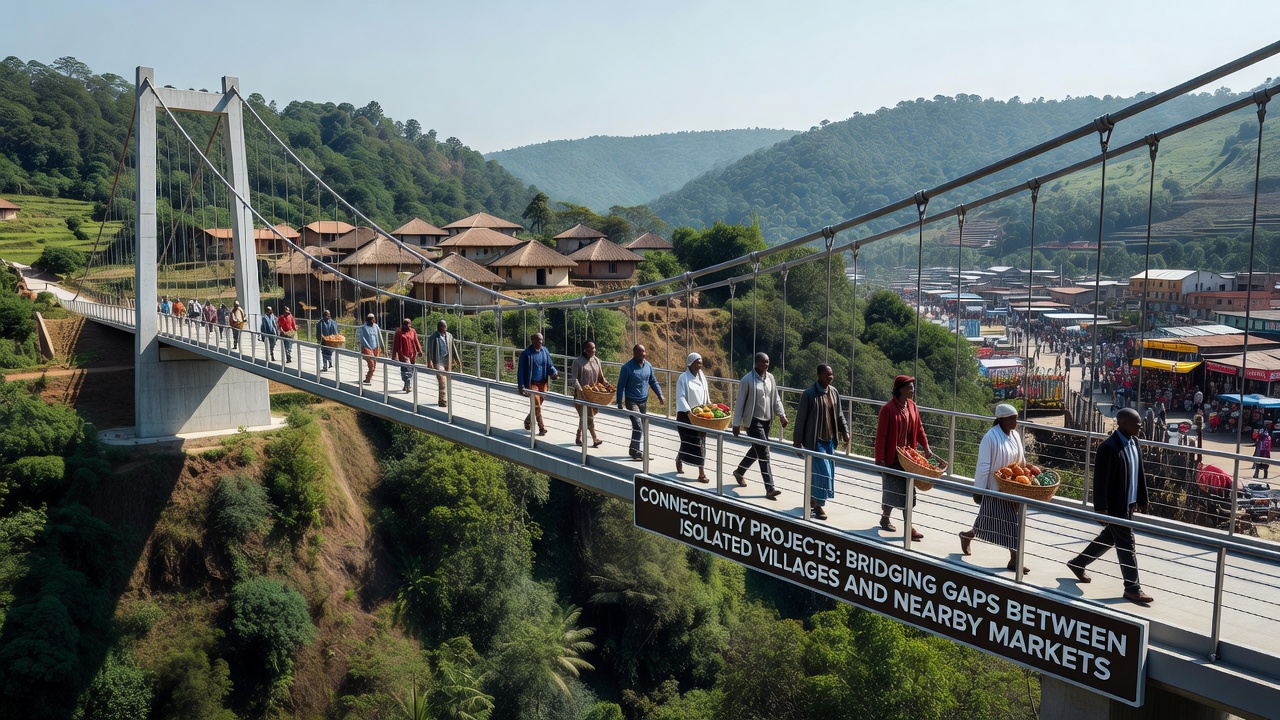
October 2026 marks the scheduled completion of several multi-country corridors under the African Union’s Programme for Infrastructure Development, with monitoring teams already reporting early traffic growth on segments opened ahead of schedule. Project dashboards indicate that digital sensors embedded in new pavements are transmitting load and weather data, allowing maintenance crews to intervene before potholes form and preserving the original time savings for transporters. These technical additions build on earlier lessons that connectivity benefits erode quickly without sustained upkeep.
Measured Economic and Social Outcomes
Longitudinal surveys conducted by national statistics offices reveal consistent patterns once connectivity is established. Household consumption rises between 8 and 14 percent in connected villages within five years, driven mainly by higher crop revenues and new wage opportunities in transport and trading. Women’s participation in market activities increases when safer roads and mobile payment options reduce the need for overnight stays away from home. School enrollment data from ministries of education in Peru and Ethiopia show attendance rates climbing as secondary roads shorten daily commutes for students living beyond walking distance. Health metrics improve when ambulances or motorcycle taxis can reach clinics without seasonal blockages, though researchers caution that service quality at the destination facilities must also advance for full effect.
Case examples illustrate the mechanisms. In one Ethiopian woreda, a 22-kilometer all-weather road completed in 2023 allowed a women’s beekeeping cooperative to deliver honey weekly rather than monthly, doubling membership and attracting a regional buyer who installed a small processing station near the collection point. In northern Canada a fiber link paired with winter-road upgrades enabled remote First Nations communities to participate in online equipment auctions, lowering machinery costs and raising equipment utilization rates on shared farms. These localized shifts accumulate when multiple villages along a corridor gain access simultaneously, creating thicker markets and more stable demand for transport services.
Conclusion
Connectivity investments continue to alter economic geography for previously isolated settlements, with evidence accumulating from diverse regulatory and geographic contexts. Road and bridge works deliver the largest immediate travel-time reductions, while digital layers add coordination efficiencies and new enterprise types. Sustained monitoring through 2026 and beyond will clarify how well initial gains persist under varying maintenance regimes and climate conditions, yet current figures already demonstrate that reliable links between villages and markets expand trade opportunities and associated social indicators across multiple continents.