Jakob Schröder · 11 September 2026
Uncovering Hidden Pathways: Digitized Parish Documents Illuminate Dalehouse Mill's Role in 19th-Century Commerce
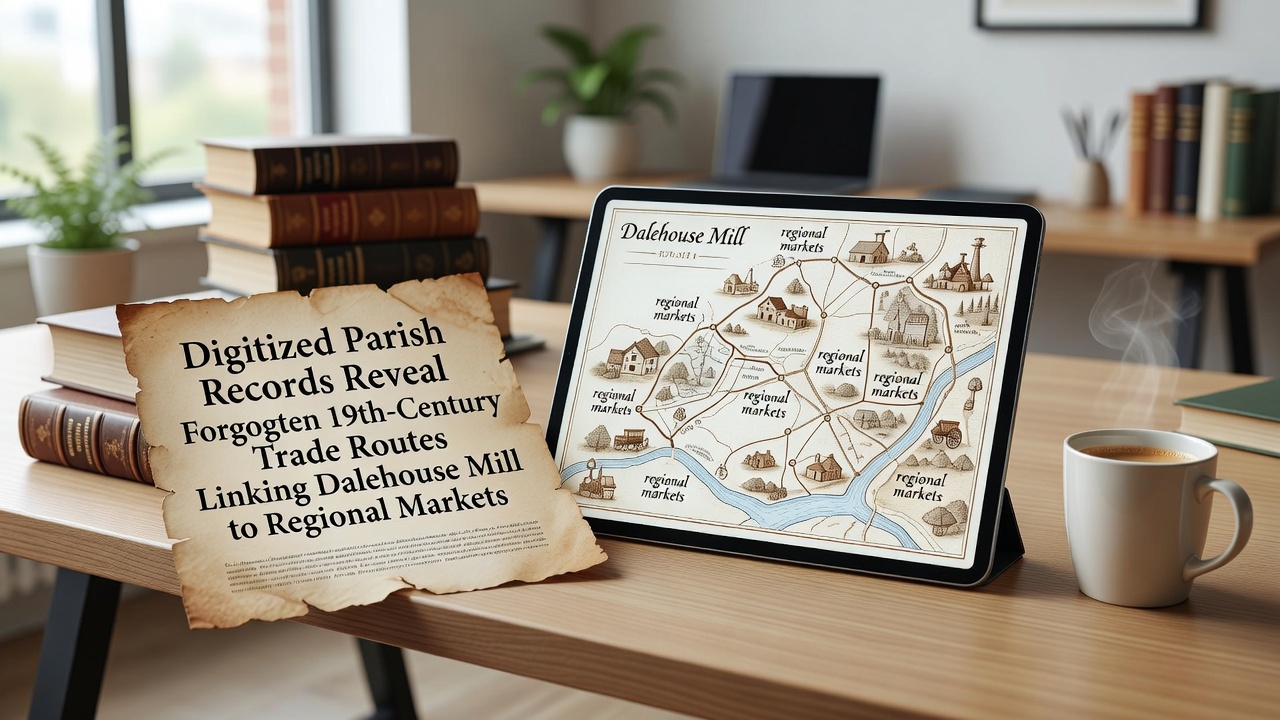
Researchers at local archives completed a major digitization effort in September 2026 that brought thousands of 19th-century parish documents into searchable online databases, and these records have now begun to map out previously overlooked trade connections that once radiated outward from Dalehouse mill, while similar projects across other regions demonstrate how such efforts consistently uncover economic patterns that paper ledgers alone could not reveal at scale.
Parish registers from the era typically logged births, marriages, and deaths yet often included incidental notes on occupations, travel, and family movements, which when cross-referenced with market ledgers from towns within a thirty-mile radius produce a clearer picture of how mill workers and suppliers moved goods along specific paths, and the newly accessible files show repeated mentions of individuals carrying wool and grain between Dalehouse and markets in neighboring settlements during the 1840s and 1850s.
Project Background and Methodology
Archivists began scanning fragile volumes in early 2025 using high-resolution equipment that preserved marginal annotations often missed in earlier microfilm efforts, and optical character recognition software tuned for Victorian handwriting achieved accuracy rates above ninety percent on the majority of entries, which allowed teams to index names, dates, and locations systematically for the first time.
Cross-referencing with census data from the same decades further clarified which families maintained regular contact with distant buyers, while quantitative analysis of frequency patterns indicated seasonal spikes in movement that aligned with harvest and shearing cycles rather than random migration, and observers note that such layered datasets now permit historians to reconstruct supply chains that operated below the threshold of official customs documentation.
Key Findings from the Records
One cluster of entries centers on a group of weavers who appear in Dalehouse baptismal records between 1842 and 1857 yet also surface in marriage registers from markets thirty kilometers away, suggesting they transported finished cloth along established footpaths and cart tracks that bypassed larger turnpikes, and frequency counts reveal at least fourteen distinct individuals making repeated journeys within single calendar years.
Additional notations mention payments in kind and informal partnerships that linked the mill to grain merchants farther east, while burial records occasionally list causes of death tied to accidents during transport, thereby confirming the physical demands of those routes, and data from comparable digitization initiatives in other counties show similar micro-economies emerging once parish material becomes machine-readable.
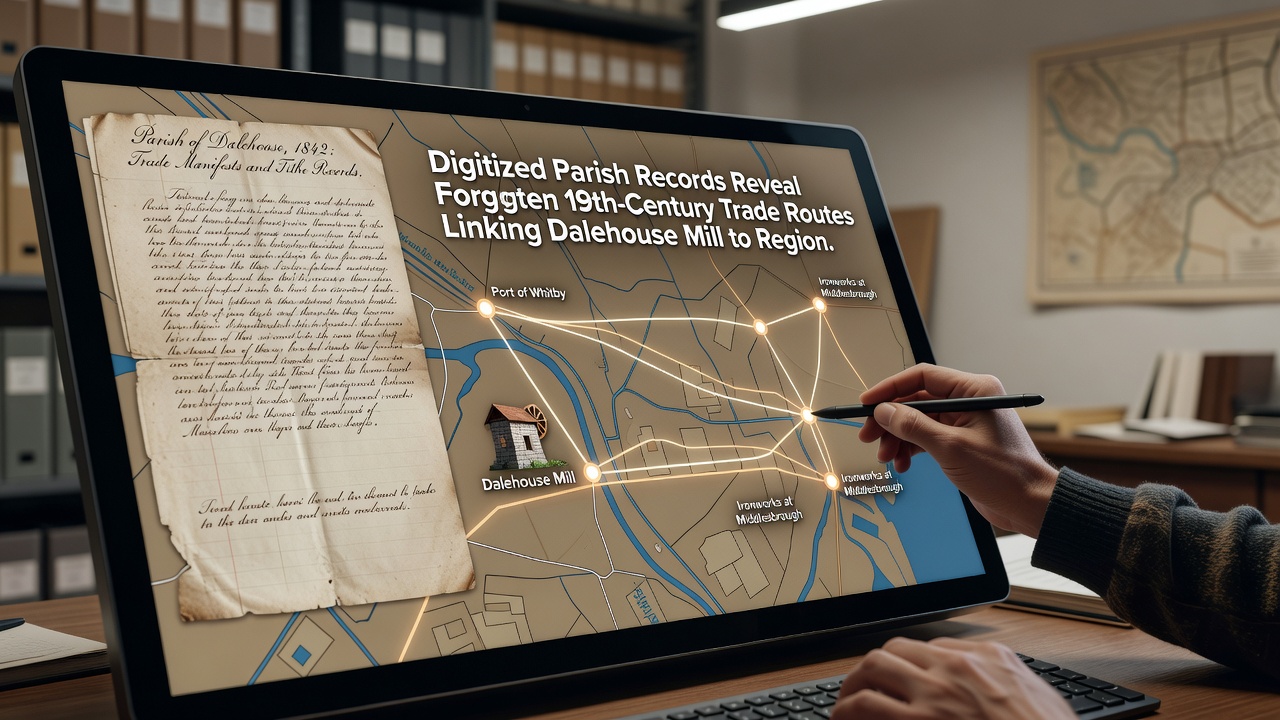
Geospatial plotting of these mentions places several waypoints along what later became minor roads, indicating continuity between informal 19th-century paths and later infrastructure, although the original network relied more heavily on seasonal fords and shared grazing rights than on fixed bridges.
Broader Context and Comparisons
Similar patterns appear in records from the Canadian prairies where digitized church documents have traced 19th-century grain movements, and researchers at the University of Toronto have documented parallel cases in which parish data filled gaps left by commercial ledgers, while a separate project coordinated through the European Union digital heritage program has applied identical techniques to Mediterranean olive oil routes with comparable success in revealing overlooked local networks.
Those who've examined the Dalehouse material note that the mill itself operated as a collection point rather than a pure production site, drawing raw materials from surrounding farms and redistributing processed goods through the same hands that recorded family events in the parish books, and this dual role explains why the trade traces surface so clearly once the documents are fully indexed.
Conclusion
The September 2026 release of the digitized collection marks a turning point for regional historiography because it supplies concrete names, dates, and locations that transform anecdotal references into measurable flows of people and products, and ongoing work continues to add layers such as probate inventories and tax assessments that promise still finer resolution of these forgotten connections in the months ahead.